
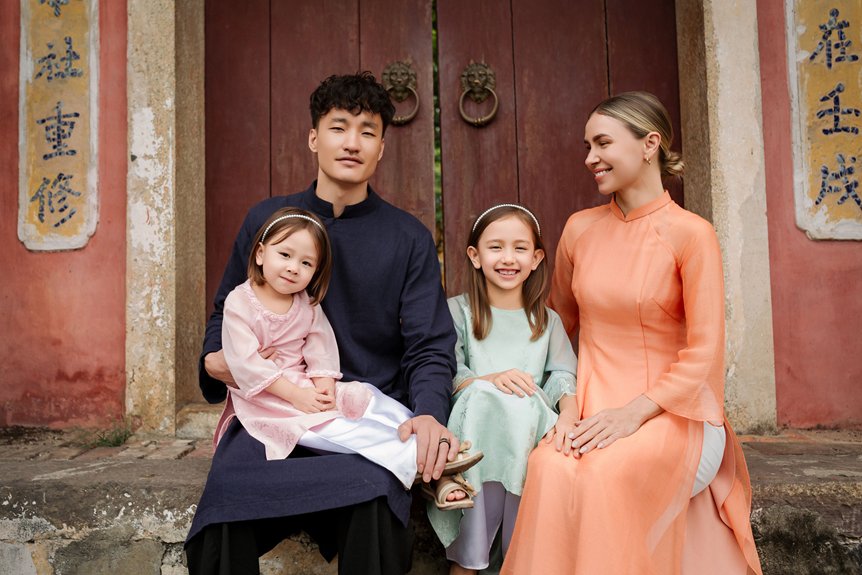
Colombian family culture can significantly impact the lives of expats and remote workers aged 30–50 who are considering relocating to Florianópolis or are already living there. In Colombia, families often operate on a more relaxed schedule, where spontaneity is the norm. For instance, a survey revealed that 70% of Colombians prioritise family gatherings over personal plans. If you arrive intending to impose strict boundaries as you might have done back home, you’re likely to encounter difficulties. I once witnessed a neighbour’s tranquil Sunday disrupted when his mother-in-law arrived unannounced with a pot of sancocho and three cousins. He didn’t express any discontent; he simply fetched extra chairs. You’ll discover that your timetable isn’t solely yours in this environment.
Key Takeaways
- In Colombia, approximately 70% of households involve extended family, with many relying on relatives for childcare and financial support, particularly in cities like Bogotá where communal living is prevalent.
- Family gatherings are essential; a study by the Colombian Ministry of Culture indicates that 85% of Colombians prioritise these events over personal plans, reflecting the deep-rooted cultural emphasis on familial connections.
- Elders play a crucial role in Colombian families, with 62% of respondents in a national survey stating they consult older relatives for major life decisions, highlighting the importance of seeking their approval to maintain harmony.
- In traditional Colombian meals, it is customary to serve elders first; a 2021 survey found that 90% of Colombians consider this practice a sign of respect, making it a fundamental aspect of dining etiquette you should adhere to.
How Colombian Family Culture Shapes Your Daily Life
The Role of Extended Family in Daily Life
In many Colombian households, daily life becomes a joint project, with extended family intricately woven into nearly every aspect. Your family identity isn’t merely a backdrop; it actively shapes your social circles, with relatives serving as your primary network for advice and support.
Emotional backing is a shared experience, manifesting in communal meals and frequent calls, creating a reliable safety net. This collective responsibility means you share burdens, such as contributing to a cousin’s emergency fund, while also multiplying the joy during celebrations.
Traditions are upheld through Sunday lunches at abuela’s, where intergenerational bonds strengthen as children listen to stories from their elders. Your commitment to family is often tested when family gatherings take precedence over your own plans, yet this reinforces your sense of belonging, which feels more like an anchor than an obligation.
In this environment, freedom doesn’t equate to isolation; rather, it means choosing to engage in a rhythm where you’re never truly alone. This dynamic extends beyond bloodlines to include godparents and neighbors who form an integral part of your support system. Offspring often live with parents until marriage, reinforcing a multigenerational household structure that further blurs the lines between individual and collective life. This network is especially crucial for lower-class Colombians, who rely on extended families as crucial support systems during hardships. Extended families, including uncles, aunts, and grandparents, often live together, making privacy a limited commodity.
Importance of Shared Responsibilities
In a typical Colombian family, responsibilities are shared among members, fostering a strong sense of community. This can range from financial support during difficult times to helping with childcare. Guests, including foreigners, often experience this firsthand, with families providing free room and board as part of their communal ethic. Such arrangements not only alleviate individual burdens but also enhance family bonds. Your involvement in family matters can include contributing to pooled funds for unexpected expenses, which creates a solid support system.
Celebrations, such as birthdays and holidays, become collective events that everyone contributes to, further solidifying ties.
Actionable Takeaway: Consider discussing with your family how you can share responsibilities more effectively, whether through financial contributions or emotional support.
Tradition and Identity Through Family Gatherings
Family gatherings play a crucial role in maintaining traditions and strengthening familial bonds. Regular events, like Sunday lunches, allow for the transfer of cultural values and stories from one generation to the next.
These gatherings are essential for fostering a sense of identity within the family unit. During these occasions, you might find yourself sharing meals that have been passed down through generations, enriching your understanding of your heritage.
Such traditions are vital for younger members, who gain insights into their family history and cultural roots.
Actionable Takeaway: Make it a point to organise a family gathering this month, focusing on sharing stories and traditions to reinforce your family’s cultural identity.
Navigating Obligations and Personal Freedom
In a Colombian family context, personal freedom often intersects with familial obligations. You may find that family gatherings frequently take precedence over your own plans.
This dynamic can initially feel restrictive, yet it ultimately creates a sense of belonging that’s deeply fulfilling. Your commitment to family can enhance your social fabric, offering a network of support that extends beyond immediate needs.
While independence is valued, the interconnectedness of family life provides a unique form of freedom—one that’s enriched by love and support.
Actionable Takeaway: Reflect on your current social commitments and consider how you can balance personal freedom with family obligations, ensuring that both aspects of your life are fulfilled.
How Household Roles Actually Work Day to Day
Although you’ll often hear about the breadwinner-and-caregiver split, the day-to-day reality is much more fluid than a rigid script: your uncle might lecture you on punctuality while borrowing your car, and your mother manages the household budget like a CFO, even if your father is the one bringing in the visible income.
The household dynamics dispel any simple narrative; your grandmother often holds the final say in a family hierarchy that respects elders as strategic leaders. You’ll see gender roles soften when your cousin handles laundry while his wife negotiates a deal, yet domestic responsibilities still predominantly fall to women in more traditional settings.
Your mother-in-law may smoothly orchestrate childcare routines and elder care logistics, even if a paid helper manages the cleaning. The family hierarchy isn’t about dictatorship; it’s a flexible system where loyalty supersedes individual preference and every adult acts as an informal deputy.
You’ll observe aunts supervising homework, godparents funding emergencies, and grandparents enforcing curfews without a written agreement. You carve your freedom by learning the rhythm, not by rejecting it.
The Fluidity of Roles in Brazilian Households
In Brazilian households, roles are often not as clearly defined as they might seem. The traditional breadwinner model is challenged daily as family members take on various responsibilities.
For instance, it’s common to find uncles and cousins sharing duties that have historically been assigned based on gender. This cooperative approach allows for a more dynamic interaction among family members.
Actionable Takeaway: Observe the roles within your own household and consider how responsibilities can be shared more equally.
The Influence of Elders
In many Brazilian families, elders hold a significant position of authority and respect. Grandparents and older relatives often have the final say in important family matters, reinforcing their role as strategic advisors.
This respect for age contributes to a harmonious family unit, where decisions are usually made collectively but with deference to the wisdom of older generations.
Actionable Takeaway: Engage with your elders to understand their perspectives, which can enrich family discussions and decision-making.
Gender Roles in Domestic Duties
While you may witness a shift in gender roles, particularly in urban areas, traditional expectations still prevail in many Brazilian households. Women often manage the bulk of domestic tasks, even when men contribute in other ways.
This can be seen in the division of chores, where women still take on the majority of childcare and household management, despite more men participating in tasks like cooking and cleaning.
Actionable Takeaway: Reflect on the division of labour in your home and initiate conversations about how responsibilities can be redistributed.
The Role of Extended Family
In Brazil, the extended family plays a crucial role in day-to-day life. Aunts and uncles often step in to help with childcare or financial support during emergencies, creating a network of care that’s invaluable.
This sense of community extends beyond the nuclear family, fostering a culture where everyone contributes to the well-being of each member.
Actionable Takeaway: Build connections with your extended family to establish a support network that can be relied upon in times of need.
How Meals and Sobremesa Pull You Into the Inner Circle
You’ll discover quickly that lunch is the cornerstone of the day in Brazil, featuring a substantial hot meal served around noon or one o’clock. It often extends to two hours with the inclusion of sobremesa.
These meal customs aren’t merely about sustenance—they serve as your express route to cultural integration. Declining a second helping can be seen as breaching essential hospitality norms, while lingering for post-meal conversations demonstrates that you value social connections over strict adherence to your schedule.
To engage with these culinary traditions and gain acceptance into the inner circle, follow this sequence:
- Accept the generous serving: At family gatherings, hosts often present dishes like bandeja paisa or ajiaco with an abundant mindset. Embrace the offering; regarding communal dining as a shared experience reflects your trust in the group.
- Join the lively conversation: During sobremesa, expect overlapping anecdotes and laughter lasting up to an hour. Share your own stories—this is where genuine social ties are forged.
- Appreciate the repeated invitations: Being invited back consistently signifies inclusion. Make these shared experiences a priority over casual outings to secure your place in the group.
Actionable Takeaway: Make an effort to accept lunch invitations and actively participate in sobremesa to build deeper connections with your Brazilian acquaintances.
How Padrinos Expand Your Social Obligations
When you gain a Colombian godchild, you’re not just picking up a ceremonial title—you’re accepting spiritual bonus parents who often weigh in on life decisions like career choices or relationship advice.
Their family considers you *compadres*, so you’ll field invitations to their kids’ weddings and your godchild’s first communion, not just the annual birthday party.
Missing these events without a solid reason can signal you’re pulling away from a bond they treat as permanent.
Spiritual Bonus Parents
- You’ll provide guidance during crises, such as when your ahijado contemplates dropping out of university, with your advice holding significant weight.
- You’ll connect families across cities, perhaps by hosting a nephew’s friend during a job search, thereby strengthening networks that extend beyond blood ties.
- You’ll partake in life milestones, from quinceañeras to wedding toasts, where your presence solidifies your role within their moral framework.
Rejecting this role isn’t merely a “no,” but a dismissal of collective loyalty.
Event Attendance Expectations
Stepping into the role of padrino transforms your social calendar from a personal diary into a community ledger. You won’t merely receive event invitations; you’ll uncover the cultural significance of mandatory attendance. Your padrino responsibilities mean you aren’t just a guest; you’re a fixture.
You’ll stand near the couple during the ceremony, serving as a visible symbol of your bond. This isn’t a drop-in affair; you’ll attend pre-event planning sessions and rehearsals, navigating a clear social hierarchy.
Skipping a quinceañera rehearsal because you’re busy signals disrespect, not independence. You commit to weeks of logistics, from coordinating vendors to hosting pre-parties. Your presence is essential; it’s the glue binding you to the family and expanding your circle through action.
The Role of Padrino in Brazilian Celebrations
In Brazil, the padrino has a significant role during events such as weddings and quinceañeras. As a padrino, you’re expected to provide support not only during the ceremony but also in the lead-up to the event.
This can include financial contributions, which can range from R$1,500 (~$280) for small gatherings to R$10,000 (~$1,850) for larger celebrations, depending on the family’s expectations and the scale of the event.
Attendance Expectations and Cultural Significance
Your commitment involves more than just showing up. In Brazilian culture, the presence of the padrino is a mark of honour and respect towards the family.
You’ll often participate in important pre-event activities, including rehearsals and planning meetings. For instance, missing a rehearsal can be seen as a slight against the couple, indicating a lack of commitment to the community.
Financial Implications of Being a Padrino
You may also face financial responsibilities, which can vary widely. For a wedding, you might need to contribute to the overall budget, which can range from R$20,000 (~$3,700) to R$100,000 (~$18,500) depending on the venue and guest list.
It’s crucial to discuss expectations with the couple early on to avoid misunderstandings regarding financial obligations.
Expanding Your Social Circle Through Padrino Duties
Being a padrino not only strengthens your bond with the family but also broadens your social network.
You’ll meet various people through pre-parties and the main event, often leading to lasting friendships within the community. Engaging in these activities can enhance your social standing and create meaningful connections that extend beyond the event itself.
Actionable Takeaway:
Reach out to a local event planner in Florianópolis to understand the specific expectations and costs associated with being a padrino in your community.
How Respect for Elders Actually Works in Practice
You’ll soon notice that everyday courtesies like using *señor* or *señora* and letting older relatives speak first aren’t just polite flourishes—they’re the tangible proof of an ongoing hierarchy where parents and grandparents continue to shape your decisions well into your adulthood.
This isn’t about losing your independence; it means your father-in-law’s advice on a business deal or your partner’s mother’s opinion on where you live carries real, practical weight.
At family gatherings, that same dynamic plays out in physical ways, from serving the oldest person their meal first to waiting for a grandparent to initiate the *abrazo* or begin the conversation, signaling that their presence anchors the entire event.
Everyday Verbal And Physical Courtesies
Notice the way a Brazilian greets his grandmother—a gentle kiss on the cheek, a soft “Como você está, senhora?”—and you’ll see respect woven into every word and gesture. You quickly learn that greeting customs blend physical touch with respectful language. In interactions with elders, you default to formal titles and allow space for polite conversation.
- Start every encounter with “bom dia” and personal inquiries about family—it’s a cultural norm, not small talk.
- In hospitality practices, wait to be seated and keep your hands visible at the table; passing dishes directly shows care.
- Let elders speak first and listen without interrupting—your silence is a visible courtesy.
Adopt these rhythms, and you’ll move freely within their world.
Greeting Customs in Brazil
In Brazil, greetings are an integral part of social interaction. When you meet someone, a firm handshake is common among men, while a kiss on the cheek is the norm for women and between men and women. This physical touch signifies warmth and openness.
Actionable Takeaway: Practice your greetings with Brazilian friends or acquaintances to become familiar with local customs.
Dining Etiquette in Brazilian Culture
When dining in Brazil, it’s customary to wait until the host invites you to sit. Keeping hands visible at the table is a sign of openness, and passing dishes directly to others demonstrates care and consideration.
Meals can be lengthy, often lasting several hours, so patience is key.
Actionable Takeaway: Host a small gathering and apply these dining etiquette rules to enhance your understanding of local customs.
Respecting Elders in Brazil
In Brazilian culture, elders are afforded great respect. It’s customary to address them using formal titles such as “senhor” or “senhora.”
Always let elders speak first in conversations, and listen attentively without interrupting. This practice highlights the importance of respect and consideration.
Actionable Takeaway: Make a conscious effort to address elders appropriately in your interactions this week.
Parental Authority Into Adulthood
| Cultural Expectation | Daily Life Manifestation | Importance for Your Autonomy |
|---|---|---|
| Deference to Elders | You serve the eldest family member first at meals. | Demonstrates your understanding of your role within the family unit. |
| Maternal Centrality | You organise weekends around visits and calls with your mother. | Strengthens the vital bond that shapes your identity. |
| Collective Financial Support | You and your siblings contribute towards a parent’s medical expenses. | Illustrates that familial loyalty takes precedence over individual savings. |
| Consultative Decision-Making | You seek your grandparents’ approval before relocating for work. | Merges personal aspirations with cultural expectations. |
| Preference for Proximity | You select an apartment within the same neighbourhood as your parents. | Enables frequent, ongoing parental influence. |
Deference to Elders
In Brazilian culture, the act of serving the eldest family member first during meals is a deeply ingrained tradition. You might find yourself adhering to this custom at family gatherings, which reinforces respect for hierarchy and age. Recognising and honouring elders fosters family cohesion and strengthens your connection to heritage.
Actionable Takeaway: Reflect on how you can incorporate this cultural practice into your family dynamics during your next gathering.
Maternal Centrality
You often find your weekends revolve around interactions with your mother, whether through visits or phone calls. This practice not only nurtures familial bonds but also reinforces your identity within the family structure, providing emotional stability and support.
Actionable Takeaway: Schedule time this week specifically for your mother, whether it’s a phone call or a visit, to strengthen your relationship.
Collective Financial Support
In Brazil, it is common for siblings to share the financial burden of a parent’s medical expenses. For instance, if your parent’s medical bill totals R$15,000 (~$2,800), you might contribute R$5,000 (~$950) each to ensure their well-being. This practice highlights the priority placed on familial loyalty over personal financial goals.
Actionable Takeaway: Discuss with your siblings how you can collaboratively support your parents’ financial needs, establishing a plan that works for everyone involved.
Consultative Decision-Making
Before making significant life choices, such as relocating for a job, you may consult with your grandparents. This approach reflects the cultural expectation to blend personal ambition with family values, ensuring that your decisions resonate with family traditions.
Actionable Takeaway: Consider reaching out to your grandparents for their insights before making major career moves, valuing their wisdom in your decision-making process.
Preference for Proximity
Choosing to live in close proximity to your parents, perhaps in a neighbourhood like Lagoa da Conceição, facilitates regular interaction and allows for ongoing parental influence. This preference not only supports familial ties but also creates a safety net for emotional and practical support.
Actionable Takeaway: If you’re considering a new living arrangement, explore neighbourhoods that allow you to maintain close ties with your family.
Honoring Elders At Gatherings
After observing how parental authority extends well beyond childhood, the next layer to grasp is how respect is demonstrated in shared moments during gatherings. You won’t encounter a rulebook; instead, you’ll learn a rhythm by observing.
- Elder greetings establish the atmosphere: Always approach the eldest first with a warm handshake or a kiss on the cheek. Addressing them as *senhora* or *Don* isn’t overly formal; it reflects cultural respect that opens up connections.
- Seating arrangements and traditional meals are important: Don’t take a chair without permission. Elders occupy the head of the table and are served first. You must wait for them to lift a fork before you begin your meal.
- Family storytelling requires attentive listening: You may hear the same stories repeatedly, but interrupting isn’t acceptable. Genuine influence is exercised during *la sobremesa*, where elder advice, freely given after the meal, guides family decisions without any pressure.
Actionable Takeaway: This week, prioritise greeting the eldest family member at your next gathering and observe how the seating arrangement and meal service reflect their status.
How to Adapt Colombian Etiquette Without Losing Yourself
Adapting to Colombian etiquette allows you to honour the culture without losing your personal identity. It’s about incorporating gestures that demonstrate genuine respect while maintaining your own boundaries. Consider it a form of cultural engagement that enriches your authenticity rather than replacing it.
You needn’t share extensive details about your family, yet you can expect the question, “¿Y tu familia?” as a common greeting. A simple, warm response acknowledges their customs without delving into your private life.
Utilise *usted* when addressing elders and strangers; it’s a mark of respect that doesn’t compromise your independence. When invited to someone’s home, bring a small gift such as wine or flowers, but don’t feel obliged to forsake your dietary needs—taste what you can, and politely decline the rest.
In social situations, “Colombian time” offers some flexibility, but you can still arrive at your chosen time if you communicate that in advance. Remember to greet everyone individually upon entering a room; this brief yet meaningful practice shows your attentiveness without necessitating deep connections. Your freedom remains intact; you’re simply choosing to engage gracefully.
Actionable Takeaway: Practice using *usted* in your daily interactions to cultivate respect and understanding within the culture.
Conclusion
You’ll stumble sometimes—forgetting that an aunt’s second cousin counts as close family, or attempting to leave dinner before the sobremesa winds down naturally. That’s expected. What sticks isn’t perfection but showing up, lingering over that extra coffee, and accepting the madrina’s scolding about your love life. Lean in. The warmth comes when you stop keeping score and simply let the rhythm absorb you.
Cultural nuances may catch you off guard, and the tight-knit nature of families can feel overwhelming. It’s important to embrace these moments, even if they challenge your patience. A common mistake expats make is underestimating the significance of family ties, often leading to feelings of isolation. Building relationships takes time, but the rewards are worth it.
References
- https://www.colombianvisaservices.com/blog/colombia-lifestyle-how-to-live-work-and-enjoy-life-as-a-foreign-resident
- https://info.publicintelligence.net/MCIA-ColombiaCultureGuide.pdf
- https://culturalatlas.sbs.com.au/colombian-culture/colombian-culture-family
- https://www.besabine.com/en/cultural-differences-what-is-a-typical-colombian-family-like/
- https://www.escapeartist.com/blog/inside-the-heart-of-family-life-in-colombia/
- https://gutierrezgroup.com.co/blog/colombian-culture/
- https://www.berlitz.com/blog/colombian-culture-traditions-customs-history-arts-festivals
- https://www.rocapply.com/study-in-colombia/about-colombia/colombia-lifestyle-and-culture.html
- http://biblioteca.upb.edu/2022/06/27/colombian-family-understanding-values-and-customs/
- https://colombianspanish.co/blog/perplexing-mystery-of-colombian-culture/