I bought the Nurosym vagus nerve stimulator a few months ago, mainly because I wanted help with sleep and stress. My honest verdict after about three months is that I can’t point to a dramatic transformation, but I also can’t say it did nothing — the reality is somewhere in the middle.
That is probably the most honest way to review a product like this. Devices in the wellness-tech space often come with strong promises, a lot of scientific language, and a price tag that makes you want a clear answer immediately. But sleep, stress, recovery, and nervous-system regulation are messy things, so isolating the effect of one device is difficult.
What Nurosym Is
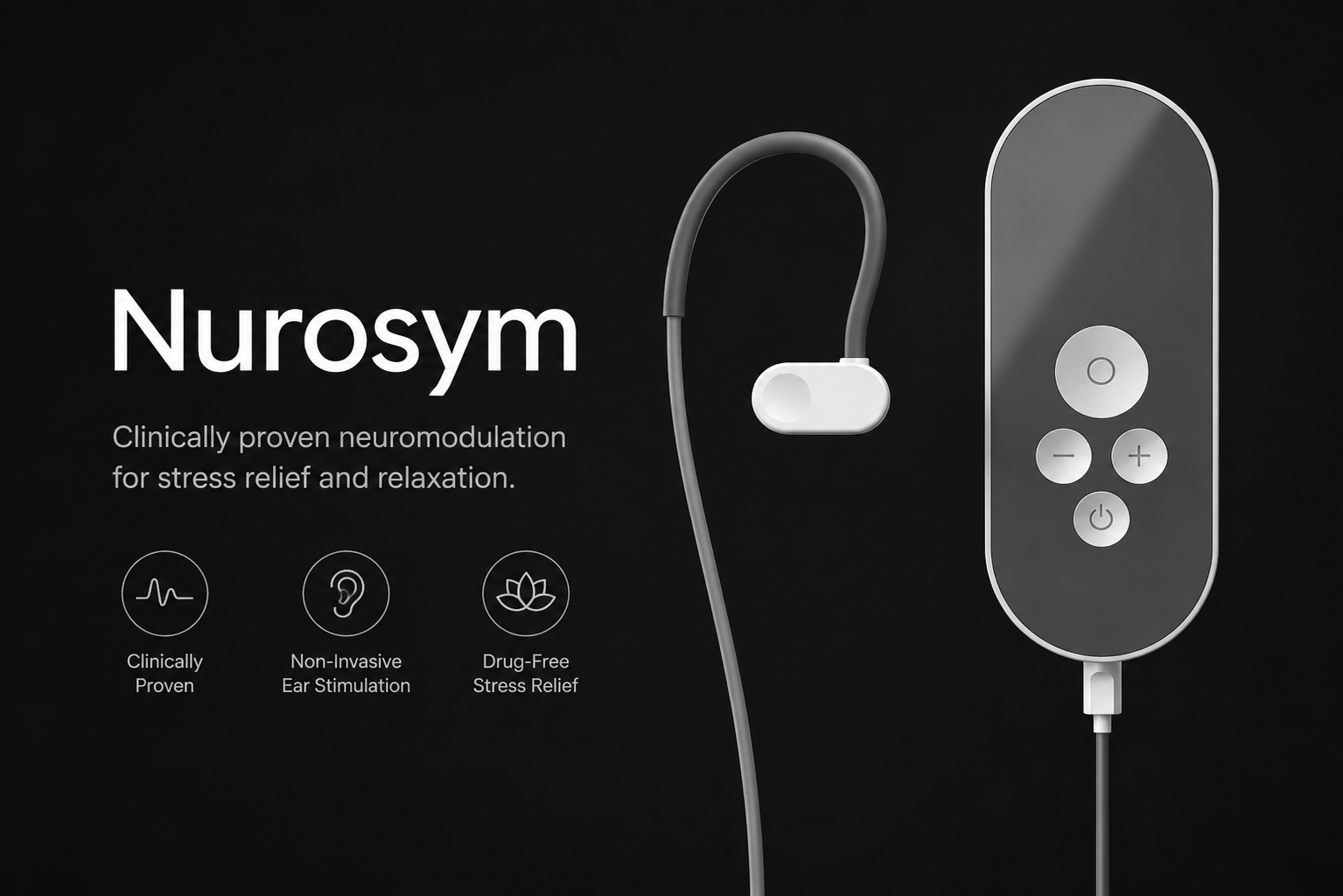
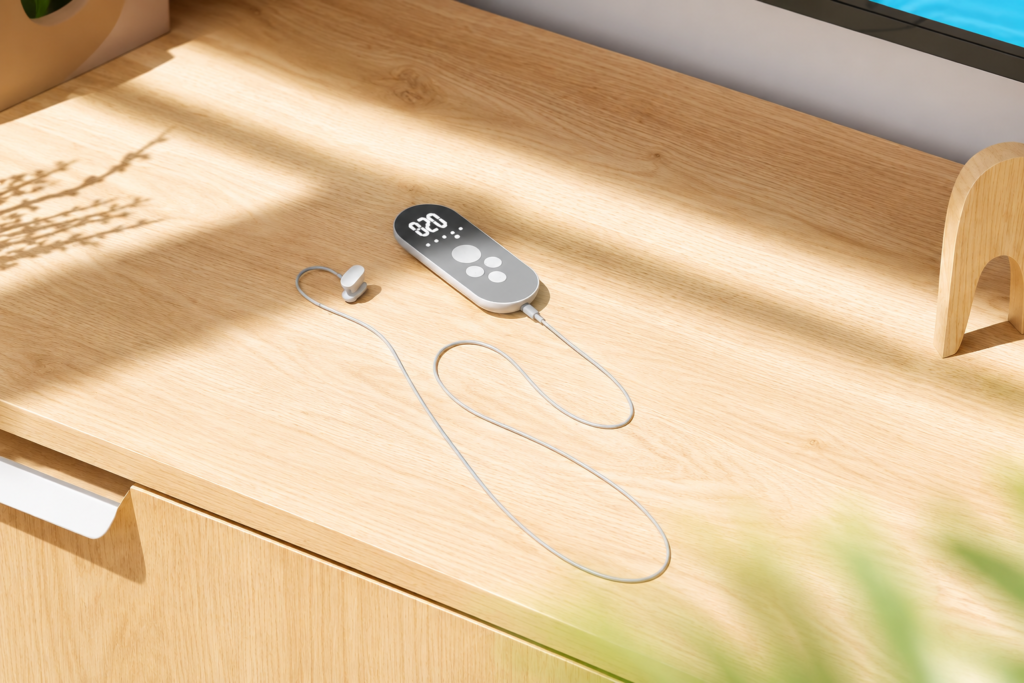
Nurosym, which is called Nuropod in the US, is a vagus nerve stimulation device. The basic idea is that it sends targeted electrical signals through the vagus nerve, which is connected to the body’s parasympathetic nervous system.
In plain English, this is the part of the nervous system associated with calming down, slowing things a bit, and moving out of a more stressed state. That is the theory behind why people use it for relaxation, recovery, sleep support, and stress management.
The marketing also extends into broader claims around energy, longevity, inflammation, heart rate variability, and general wellbeing. That wide claim-set is part of what makes it interesting, but also what makes me cautious. The more a product promises, the more evidence I want to see in my own day-to-day use.
Why I Bought It
I did not buy it out of curiosity alone. I bought it because my sleep had become genuinely inconsistent, especially around mid-2025. I was waking in the night, sometimes going to the toilet and then getting mentally switched on by work thoughts, which meant I’d stay awake for hours.
That kind of sleep disruption is especially annoying because it is not necessarily “terrible sleep” every night — it is more like a few bad nights that start to build up and affect everything. Once sleep gets thrown off, even slightly, the next day’s training, concentration, mood, and decision-making can all take a hit.
I was also doing a few other things at the same time, including blue light blockers at night and stopping work earlier before bed. That matters, because once you change several variables at once, you can’t honestly pretend one device was the sole reason for any improvement.
What The Brand Claims

The reason people buy something like Nurosym is that the brand presents it as science-backed. On the surface, that is appealing: there are references to scientific studies, university involvement, and institutional use, including mention of places like the NHS, Penn, Imperial College London, and UCL.
The platform also highlights improvements in areas like sleep, inflammation, tiredness, depressive states, memory, and heart rate variability. Those are all attractive outcomes, but I would treat them as claims to investigate rather than claims to accept at face value. A lot of wellness devices sound impressive when described in a polished landing page, yet feel much less obvious in real life.
That is really the tension here. The evidence may be interesting, but the user experience still has to justify the price and the time commitment.
How It Feels To Use
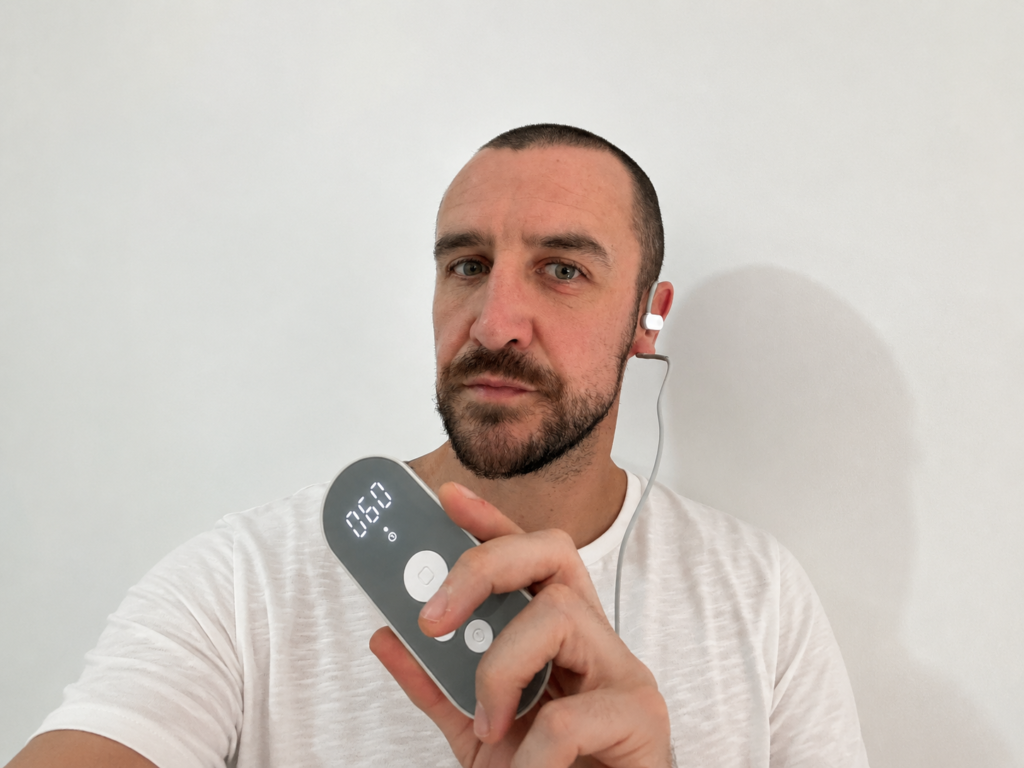
Using the device is simple enough. It clips onto the left ear, and the instructions say to lightly moisten the contact area before wearing it. From there, you turn it on and slowly increase the intensity until you feel a mild tingling sensation.
In my case, once I got up to around level 25, I could feel the tingling clearly. If I pushed it higher, it started to feel less like a neutral stimulation and more like itching or irritation, which is not exactly the relaxing experience you hope for when you are trying to calm the nervous system.
That is important, because comfort affects consistency. If something is unpleasant enough that you do not want to wear it regularly, then even a theoretically useful tool becomes hard to evaluate properly in the real world.
Session Length And Routine
The recommended session length is around 60 minutes, but I found that difficult to sit through comfortably. For me, 45 minutes felt more realistic, and beyond that it started to feel irritating rather than helpful.
The brand seems to suggest that the benefit is cumulative, meaning you do not need one perfect session every day for it to be useful. Instead, the idea is that regular use over time may matter more than any single session, which is fair enough in theory.
But this also makes the evaluation harder. If the benefit is slow, cumulative, and subtle, then it becomes difficult to tell whether the device is actually helping or whether the improvement comes from something else in your routine.
Sleep Changes
The biggest reason I bought it was sleep, and sleep is also where I noticed the most improvement during that period. But I need to be careful here: I cannot cleanly attribute that improvement to Nurosym alone.
During the same period, I changed multiple sleep-related habits. I stopped working late at night, used blue light blockers, and avoided lying in bed and working, which is a surprisingly important change if your brain has started associating your bed with activation and problem-solving.
I also think travel and time-zone changes played a role. I went back to England in August, and that shift may have helped reset things too. So yes, my sleep improved — but no, I do not think it is honest to say the device was the only or even the main cause.
HRV And Recovery Data
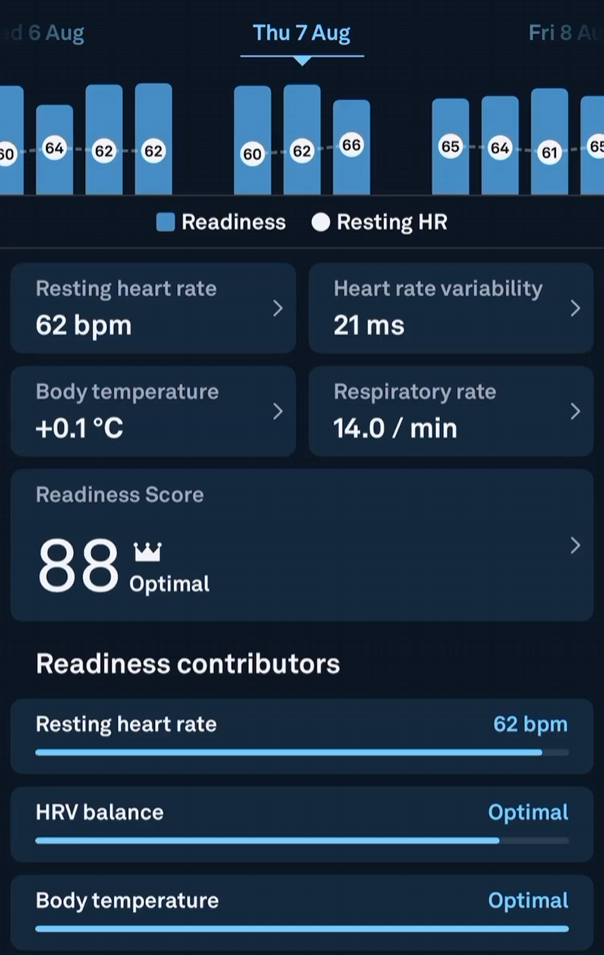
I checked my Oura data to see whether the device was doing anything measurable, especially with heart rate variability. From what I looked at, I did not see a clear, consistent upward shift that I could confidently attribute to Nurosym.
There were fluctuations, but nothing that screamed “obvious device effect.” Some periods were worse because I was ill, some reflected training load, and some may simply have been normal variation. In other words, the data did not give me a neat answer.
That is not a failure of the review. It is the review. A lot of people want a clean yes or no, but the honest answer is that the numbers did not show a dramatic change for me.
Cost And Value
The device is expensive. In the US, the pricing is around $900, and in the UK it appears to sit around £616, though discounts or coupon codes may bring that down.
At that price, expectations naturally rise. If something costs that much, it needs to do more than create a vague sense that it might be beneficial in the background. It needs to deliver either a noticeable subjective benefit or a measurable objective one.
That is why I think the value proposition is mixed. For someone who has already tried the basics and wants to experiment with nervous-system tools, it may be worth testing. For someone hoping for a simple fix to poor sleep, it feels like an expensive first step.
What I Think It Is Good For
I do think there is a reasonable case for people who are dealing with stress, anxiety, sleep disruption, or recovery issues and who have already handled the basics. If you have already worked on sleep hygiene, workload, screen habits, and training load, then a device like this might be a useful experiment.
It may also suit people who are very methodical, comfortable tracking data, and willing to test one variable over a decent period of time. In that context, even a subtle effect can be meaningful if it helps stack the odds in your favour.
I would also say that if someone is desperate and has tried everything else, I can understand why this would be tempting. That was basically my position too — not because I believed it would solve everything, but because I wanted one more tool in the mix.
What I Would Do Differently
If I were starting again, I would try the simpler things first and only then test Nurosym. I would track one change at a time, instead of changing sleep habits, evening routine, light exposure, and device use all together.
That is the cleanest way to know what actually works. If you make five changes at once, you may improve your sleep, but you will not know which lever mattered most. That matters if you are trying to spend money intelligently rather than emotionally.
Final Verdict
My conclusion is cautious rather than enthusiastic. Nurosym may be helping, but I cannot honestly say it produced an obvious, isolated, measurable breakthrough for me after three months.
What I can say is that my sleep has improved overall, but that improvement happened alongside other changes that likely mattered just as much, if not more. So my current view is: interesting product, possible long-term value, but not a magic bullet.
If your sleep is already very poor, I would start with the fundamentals first. If you have already done that and want to explore vagus nerve stimulation as an extra layer, then it may be worth a careful trial.