
If you’re living abroad and topping up your local bank account by sending money to yourself through Wise or a similar transfer app, there’s a good chance you’re quietly losing money every single time you do it. This isn’t a Wise problem specifically, and it isn’t just a Brazil problem. It affects anyone living abroad who moves foreign currency into a local account to spend. But here in Brazil, the cost is sharper than most people realize, because of one extra charge almost nobody talks about.
The Hidden Cost of Sending Money to Yourself
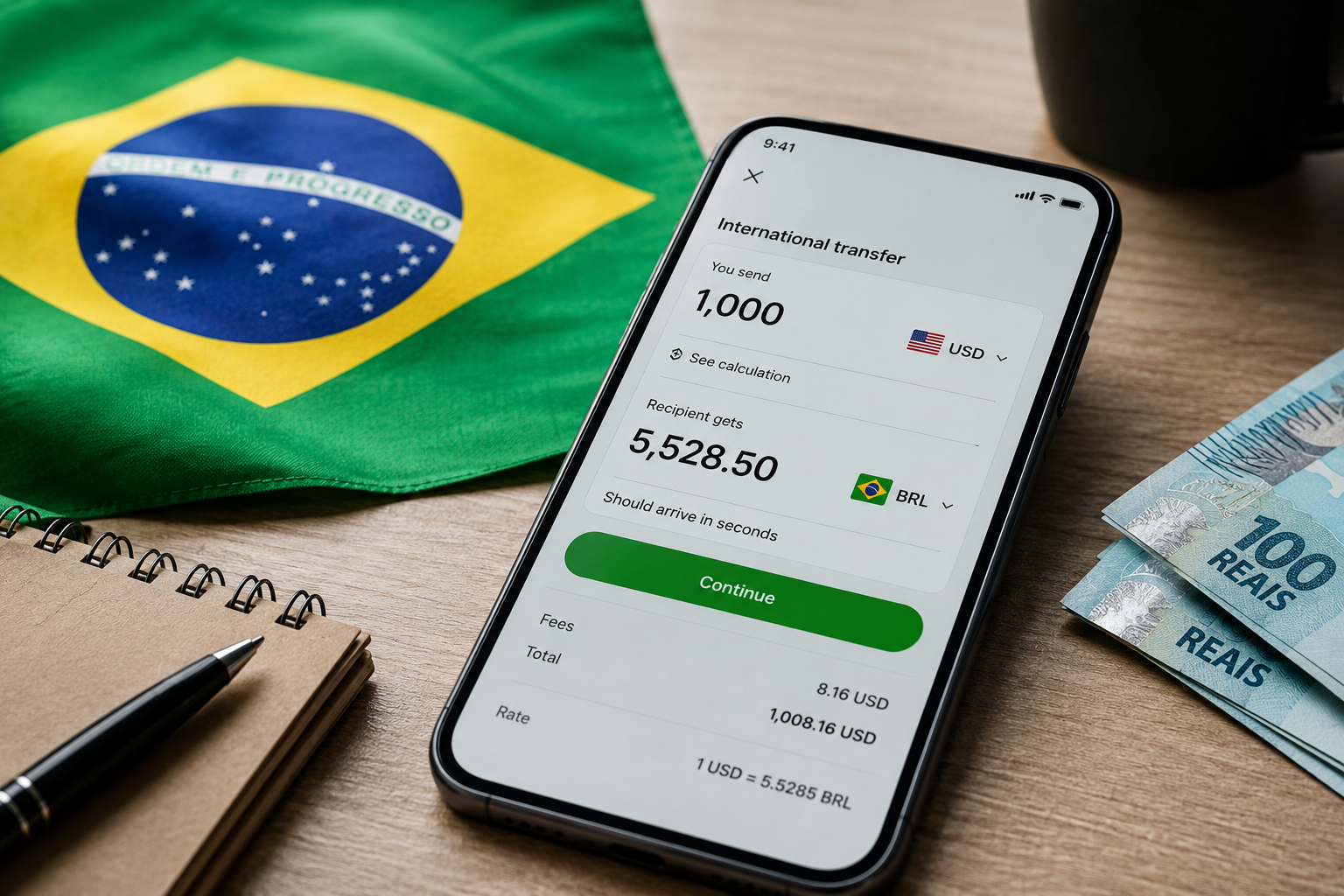
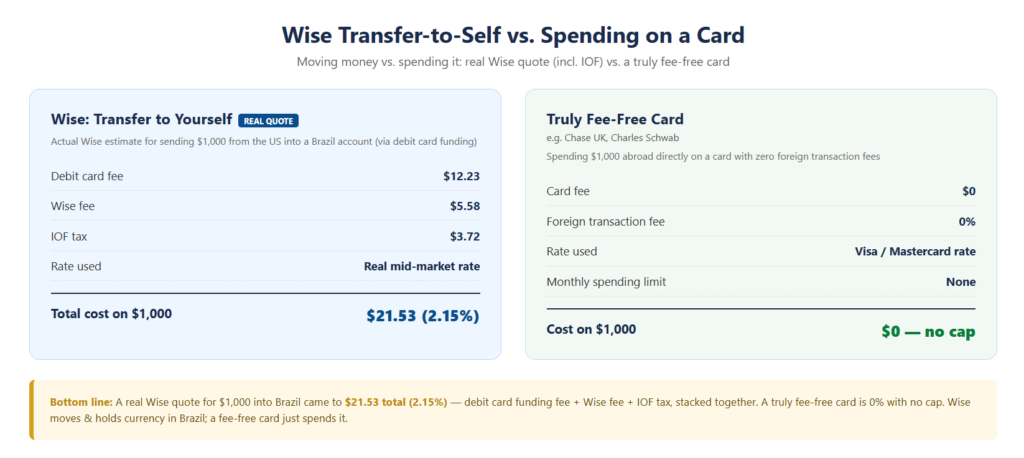
Say you send $1,000 to yourself in Brazil using Wise. Wise charges a conversion fee of around 0.78%, which already eats into that transfer before it lands. But here’s the part most people don’t know: Brazil applies IOF (Imposto sobre Operações Financeiras, the financial operations tax) on money coming in through a foreign exchange.
That means you can end up with two separate charges stacking on top of each other, the app’s fee and the country’s tax, just to move your own money into your own bank account.
The Fee-Free Foreign Card Fix
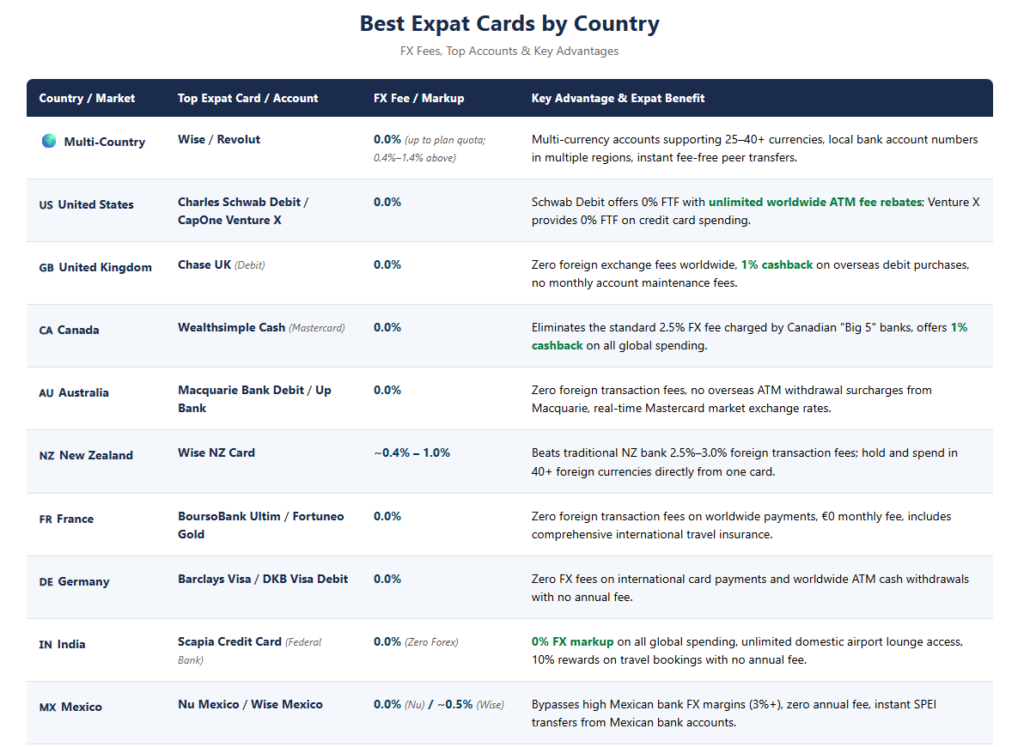
Now compare that to using a foreign debit card with no foreign transaction fees, spent directly in the local currency. I use a Chase UK card here in Brazil, and when I spend it directly, there’s no foreign transaction fee. It just runs on the standard Mastercard exchange rate, with no markup added on top. The same logic applies if you’re American: accounts like Schwab’s checking account or certain Capital One cards work the exact same way, effectively 0% cost to you.
Here’s the direct comparison:
- Send $1,000 through Wise to Brazil, and depending on the transaction type, you could lose somewhere between $11 and $35 before it even reaches your account.
- Spend that same $1,000 directly on a fee-free foreign card, and you lose close to nothing.
If you’re supporting a family (groceries, clothes, eating out, taxis, fuel) and routing all of that spending through a Wise transfer into a Brazilian account, you could be losing hundreds of dollars a month without realizing it.
What This Actually Costs Over a Year
Let’s run the numbers on $3,000 a month, which most families would agree is a fairly lean budget for supporting a household abroad.
Sending $3,000 a month through Wise as a straight remittance into Brazil costs roughly $35 to $40 a month once Wise’s conversion fee and Brazil’s IOF tax are combined. Over a year, that adds up to around $420 purely in fees and tax, for doing nothing except moving money the expensive way.
Switch to a fee-free foreign card for direct spending, and that $420 becomes pure savings, without changing anything about your lifestyle or spending habits. The more you remit to yourself, the more this costs, so the math only gets worse the more you spend.
Where a Foreign Card Won’t Work
This isn’t a perfect, universal fix. There are a few places where you’ll still need local currency in a bank account:
- School fees. My kids’ school doesn’t accept card payments at all.
- Energy Bills
- Rent
- Large Purchases like Property
- Paying for any help around the house like cleaners etc
- Tradesmen
- Services like Lawyers, Brokers etc.
- Some online marketplaces. Mercado Libre recently stopped accepting my foreign debit card, for reasons I still don’t fully understand, though it still works fine on Amazon Brazil and everywhere else I’ve tried.
Two Things to Get Right When Using a Foreign Card in Brazil
1. Always say “crédito,” never “débito.”
In Brazil, a foreign debit card is processed as a credit card as far as local terminals are concerned. If someone asks “crédito ou débito?”, always say crédito, even though it’s a debit card back home.
2. Always choose the local currency, never your home currency.
When you pay by card or pull cash from an ATM, you’ll often be asked whether you want to pay in your home currency or the local currency. Always choose the local currency (in Brazil, that’s BRL). Accepting the home-currency option triggers something called dynamic currency conversion (DCC), which lets the terminal or ATM set its own exchange rate, almost always worse than your card’s real rate.
I’ve noticed this especially with Itaú terminals, where the home-currency option (in my case, GBP) is displayed as the green button, and BRL is shown in red. It’s a deliberate bit of friction: they’re betting you’ll just hit green to get the transaction done quickly. Do that, and they add their markup right there, wiping out any savings you made by using a fee-free card in the first place, especially painful on larger purchases.
I’ve made this mistake myself in a rush, and only noticed the damage when I checked my statement afterward. I even had a checkout attendant at a supermarket self-checkout reach over and press the green button for me, assuming she was helping. She wasn’t. That one tap added a 15% markup to my groceries. Trying to explain dynamic currency conversion in imperfect Portuguese to a confused checkout worker is its own kind of expat comedy.
The Real Takeaway
This isn’t really an argument against Wise. Wise is genuinely excellent for what it’s designed for. For moving money into a local account to cover rent and recurring bills, Wise still wins. But for day-to-day spending, groceries, dinner, Uber rides, a fee-free foreign card wins every time.
If you’re living abroad, it’s worth checking with your home bank to see whether your existing debit or credit card charges foreign transaction fees. If it does, it’s worth opening an account with a bank that offers a genuinely fee-free option as soon as possible.
For Brazilians Spending Abroad
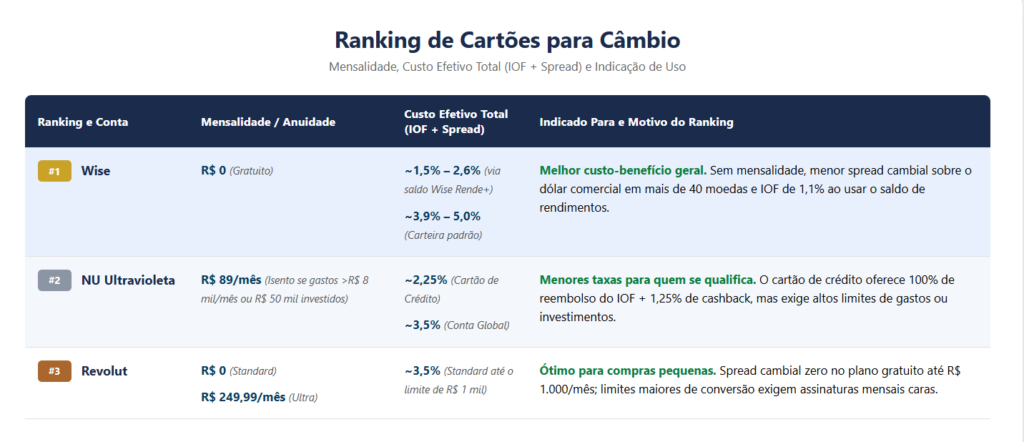
The same problem runs in reverse for Brazilians spending outside the country, and it’s arguably more complicated, since IOF applies to every transaction made abroad using a Brazilian bank account. A couple of ways to reduce that cost:
- Transfer funds into Wise or Nomad Invest first, then spend using an international debit card from there.
- If you hold a premium card such as Nubank Ultravioleta, that’s a strong runner-up option, since it offers an IOF refund plus 1.25% cashback.
Whichever direction you’re moving money, the underlying lesson is the same: it’s rarely the transfer itself that costs you the most. It’s the currency choice and the card type behind it.

