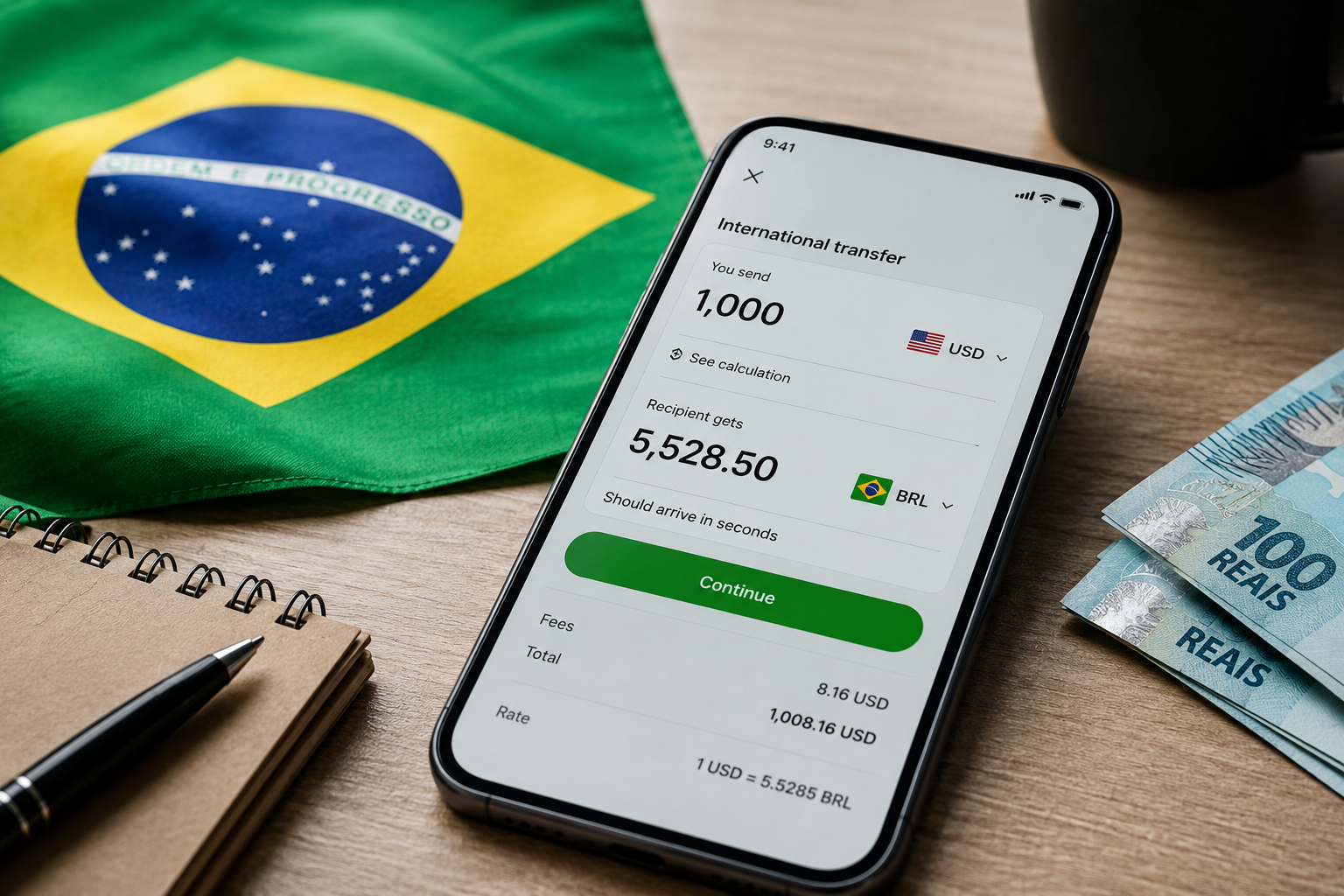

Opening a bank account in Brazil as a foreigner is essential for those seriously considering relocating to Florianópolis or already living there as remote workers, expats, or digital nomads aged 30–50. Approximately 40% of foreigners encounter challenges during this process, often due to a lack of understanding of the requirements. By breaking down the steps from obtaining your CPF to selecting between traditional and digital banks, you can navigate the process more easily. Be prepared for banks that may request additional documents or a local address, ensuring you have everything in order to avoid delays. Stay with me for a clear roadmap that will facilitate your setup.
Key Takeaways
Key Takeaways for Opening a Bank Account in Brazil as a Foreigner
- Obtain a CPF: The Cadastro de Pessoas Físicas (CPF) is mandatory for account opening. This tax identification number can be obtained from the Receita Federal and is crucial for all financial transactions in Brazil.
- Select Your Banking Option: Consider digital banks like Nubank, which boast over 40 million customers and offer streamlined online services, versus traditional banks like Itaú, known for their extensive branch network and comprehensive financial services.
- Document Requirements: You’ll need a valid passport, CPF, and proof of address. Ensure these documents are translated and legalised if necessary, especially if you’re providing proof of income, which is often required by banks.
- Initial Deposit: Be prepared for initial deposit requirements that can range from R$100 to R$500 depending on the bank and account type. This is particularly common with traditional banks like Itaú.
- Communication with Bank Staff: Maintain clear communication with bank representatives throughout the process. Delays in document approval can occur, so follow up regularly to ensure your application is progressing smoothly.
What You Need to Know About Banking Rules in Brazil
Understanding how banking operates in Brazil requires knowledge of the regulations established by central authorities rather than relying solely on what banks communicate. The Banco Central do Brasil (BCB) and the Conselho Monetário Nacional (CMN) shape the banking landscape, overseeing all financial institutions—both local and foreign—to ensure compliance with stringent standards. These institutions are also responsible for managing payment systems like PIX and SPB, which are integral to the financial infrastructure. If you’re a foreigner looking to open a bank account, be aware that the regulations aren’t merely the bank’s decision; they’re dictated by these authorities. For resident foreigners, most banks require a Cadastro de Pessoas Físicas (CPF), proof of address, and occasionally proof of income. Non-residents typically need a Certificado de Depósito de Estrangeiros (CDE), which involves opening an account through a bank authorised for foreign exchange, often necessitating a local legal representative. Additionally, the regulations include policies on data sharing and international transfer procedures, which are critical for compliance and security. Regulatory controls encompass data sharing, international transfers, and compliance checks. Familiarising yourself with this landscape equips you to engage confidently with Brazil’s banking system, grounded in transparent regulations. The Central Bank’s rules also ensure the stability and security of the country’s financial system. Actionable Takeaway: Gather the necessary documents such as your CPF and proof of address to initiate the bank account opening process today.
How to Prepare Your Documents for a Brazilian Bank Account
Preparing Your Documents for a Brazilian Bank Account
Organising your documents is the first crucial step when opening a bank account in Brazil. It’s straightforward if you know what to gather in advance. Proper document organisation saves time and reduces stress, particularly since some requirements involve translation and legalisation. Having all your documents ready beforehand ensures a smoother application process and helps avoid delays. Document preparedness focuses on the following:
- CPF Verification: Ensure your CPF (Cadastro de Pessoas Físicas) is in good standing with Receita Federal. Non-residents can obtain a CPF, which remains valid for life.
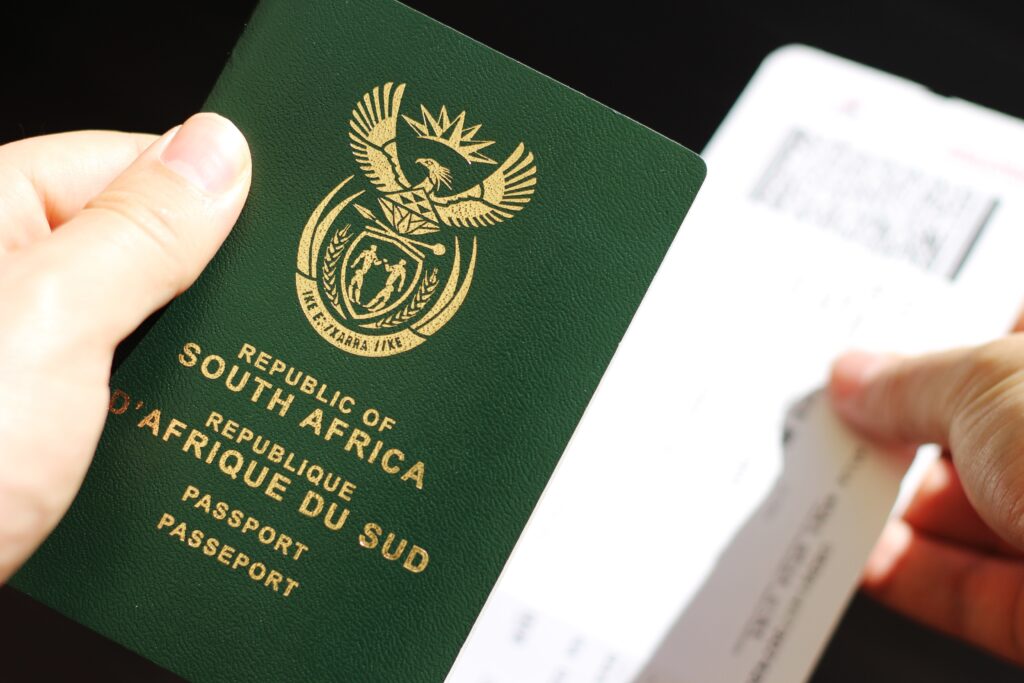
- Passport and Identification: Have a valid passport ready, including the photo page. Some banks may also request facial verification during digital onboarding.
- Proof of Address: For residents, a recent utility bill or rental contract in Brazil will suffice. Non-residents might need to provide proof of foreign residence, such as a utility bill from your home country.
- Legalisation and Translation Requirements: Foreign documents may require an apostille or legalisation, as well as a sworn translation into Portuguese.
Organise these documents in the order specified by the bank to facilitate the approval process.
Which Bank Is Best for Foreigners: Traditional or Digital?
When choosing between a traditional bank and a digital one in Brazil, your decision will largely depend on how you plan to use your account and what you value most—speed, convenience, or comprehensive services.
Digital banks offer advantages like quick onboarding, low fees, and easy access through apps, making them ideal for everyday spending, PIX transactions, and debit card usage. For instance, banks like Nubank and Banco Inter allow you to set up an account in minutes with no monthly fees, which can save you around R$20 (~$4) compared to traditional banks.
On the other hand, traditional banks such as Itaú and Banco do Brasil provide a broader range of services, including SWIFT transfers, investment options, and loans. These banks are suited for individuals requiring complex financial solutions or in-person branch support. You might encounter higher monthly fees, often around R$30 (~$6), and a lengthier account setup process that requires more documentation.
| Bank Type | Key Features |
|---|---|
| Digital Bank | Faster setup, fewer documents |
| Lower or no monthly fees (e.g., R$0 to R$20) | |
| Great for daily transactions | |
| Traditional Bank | Longer process, more paperwork |
| Higher fees (e.g., R$30 to R$50) | |
| Better for savings and financing options |
If you value freedom and agility in your banking, digital banks are often the best first step. However, if you require robust banking features, traditional banks may be the better choice for your needs.
Takeaway: Assess your banking needs and consider setting up an account with a digital bank this week to experience low fees and convenience.
How to Open a Bank Account in Brazil : A Step-by-Step Guide
Opening a bank account in Brazil can initially seem daunting, but with a structured approach, it’s entirely manageable. The process primarily involves understanding the types of accounts available and their eligibility criteria.
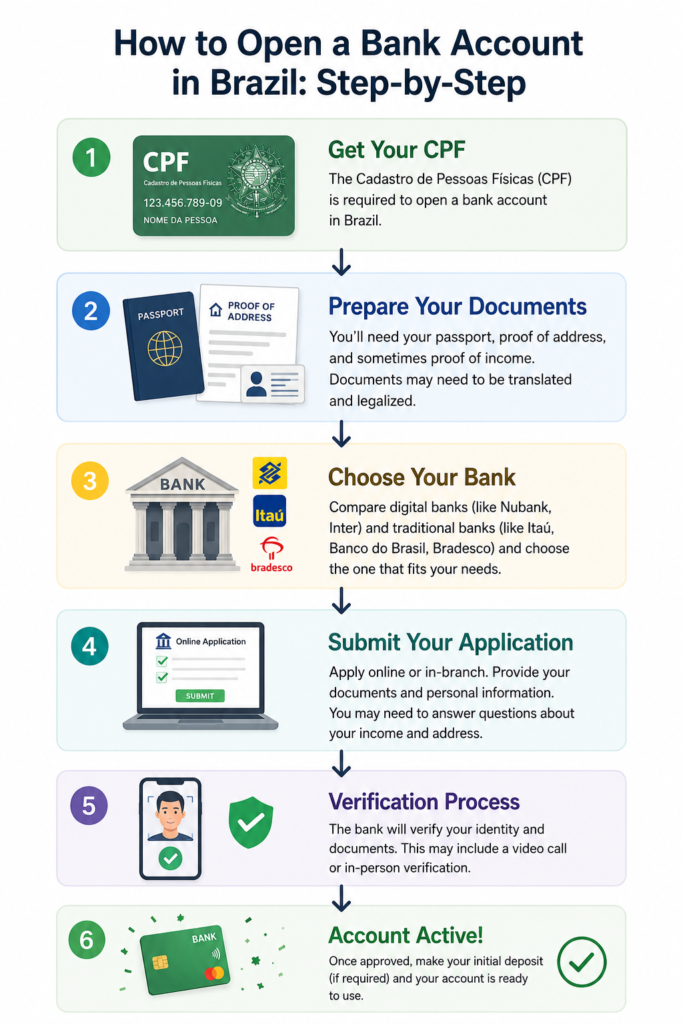
Here’s how to proceed:
- Confirm your eligibility for either a resident or non-resident account. For residents, it’s essential to have a Cadastro de Pessoas Físicas (CPF), a Certificado de Registro Nacional Migratório (CRNM) or Registro Nacional Migratório (RNM), and proof of address.
- Non-residents may encounter stricter requirements and will likely need to provide additional documentation.
- Gather the necessary documents: a valid passport, CPF, proof of address (such as a utility bill), and, in some cases, proof of income. Some banks may also require proof of funds or a foreign tax identification number.
- Research various banks before proceeding, as each institution has distinct policies and account types. It’s advisable to contact them directly to confirm your eligibility and understand their specific requirements.
- Visit the bank in person or arrange an appointment to complete the application process. Be prepared to answer questions regarding your income and to present your documents.
- Many banks will expect an initial deposit, which can vary significantly. For example, Banco do Brasil often requires a minimum initial deposit of R$100 (~$19), while Itaú may ask for R$500 (~$95).
How to Activate Your Account and Handle Common Challenges
Activating Your Bank Account in Brazil Involves Specific Steps
Activating your bank account in Brazil typically requires several straightforward actions, but being prepared can help you avoid common pitfalls.
Firstly, account verification is essential. This usually includes a liveness check using your smartphone camera to confirm your identity. Many banks now favour digital onboarding through a mobile app; however, you’ll need your passport, proof of address, and potentially proof of income.
If your documents aren’t in Portuguese, you’ll likely need to legalise them. This process entails apostilling and sworn translation, without which your application may be delayed.
Some banks require an initial deposit, commonly R$500 (~$100), to activate transactional features. Frequent challenges include incomplete proof of address or missing CPF (Cadastro de Pessoas Físicas) documents.
If you encounter such issues, contact several banks, as some are more accommodating to foreigners than others.
To expedite the process, prepare all paperwork in advance, ensuring that documents are legalised and translated. This will save you time.
Ultimately, patience and meticulousness will help you navigate the process more effectively, getting you closer to achieving financial stability in Florianópolis.
Actionable Takeaway: Gather all necessary documents, ensure they’re legalised and translated, and set up an appointment with your chosen bank this week.
Conclusion
Obtaining a Brazilian bank account as a foreigner might seem daunting at first, but it’s manageable step by step. Ensure your documents are well-organised, especially your CPF and proof of address. Whether you opt for a traditional or digital bank, patience is essential—be prepared for some waiting and questions. With persistence and attention to detail, you’ll have your account set up in no time, making your stay in Brazil a lot smoother.
However, be aware that some banks may impose high fees or require a minimum deposit, which can be a financial strain. A common mistake is underestimating the importance of local language skills; a lack of fluency can complicate the process significantly.
References
- https://campuscybercafe.com/blog/post/open-bank-account-brazil-foreigner/
- https://www.commenda.io/brazil/opening-a-business-bank-account-as-a-foreigner
- https://wise.com/us/blog/opening-a-bank-account-in-brazil
- https://markdmartin.com/opening-a-bank-account-in-brazil-a-comprehensive-guide/
- https://www.youtube.com/watch?v=E6CFAFt_iUs
- https://www.europartner.com.br/best-bank-in-brazil-for-foreigners/
- https://oliveiralawyers.com/services/cross-border/non-resident-bank-account-setup-brazil/
- https://www.reddit.com/r/Brazil/comments/1b6p0cy/opening_a_bank_account/
- https://www.riotimesonline.com/how-to-open-a-bank-account-in-brazil-as-a-foreigner/
- https://www.bbamericas.com/en/open-an-account/